


How AI Surfaces Common Customer Pain Points from Calls
The most valuable customer feedback is already happening every day on the phone. Customers call businesses with questions about pricing, availability, service details, and next steps, explaining what they need, any friction and pain points, and what’s frustrating them.
When organizations handle hundreds or thousands of calls each month, the signals from them are rarely captured in a usable way, but remain buried in transcripts, scattered CRM notes, or passed along informally by frontline staff.
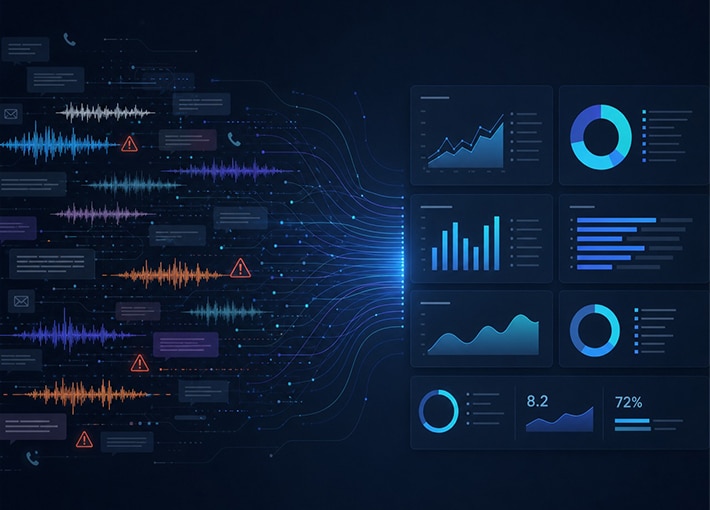
Leaders might make decisions based on assumptions or small samples rather than on what customers are actually saying at scale. AI‑powered conversation intelligence can analyze real customer calls throughout a business, bringing out the most frequent pain points with measurable impact.
How to observe patterns throughout thousands of conversations
Reviewing calls provides good context, but doing so manually rarely reveals the full picture of what’s going on with your customer engagements. For example, listening to a handful of calls can surface a complaint or two, but doing so doesn’t show whether any identified or uncovered issues are widespread or isolated.
AI‑driven conversation intelligence can analyze large volumes of calls, identifying recurring themes, questions, and friction points that emerge from real customer engagements. Across the call datasets analyzed through Marchex’s conversational intelligence solutions, common customer pain points tend to surface repeatedly, regardless of industry or location:
- Confusion about pricing, fees, or service packages
- Scheduling difficulties or appointment availability
- Long hold times or delayed callbacks
- Murky follow-ups after initial inquiry
- Service quality concerns, coverage, or eligibility
- Mismatched expectations between what was advertised and what is offered
Because AI-enabled analysis can examine conversations at scale, these issues can be surfaced as recognizable patterns tied to specific campaigns, locations, time periods, customer segments, and/or agents. Organizational leaders can gain data‑backed views of what customers are struggling with most often, so sales teams can address or fix them.
Moving beyond anecdotal feedback
Without conversation intelligence, managers may hear about problems secondhand from agents; analysts may review a small subset of calls for quality assurance; and surveys or online reviews may provide delayed and incomplete insight. Marchex platform conversational analytics data shows why those approaches fall short.
In one Marchex customer pilot, about 90% of inbound calls initially treated as sales leads were actually operational in nature, including billing questions, existing customer coordination, service inquiries, and other non‑revenue interactions. When not analyzing call content, those calls were indistinguishable from true new‑business demand. Only by analyzing the conversations, this organization uncovered that real customer pain points were misclassified, overrunning sales systems, and obscuring revenue and deal size.
When the business is able to analyze conversations at scale, teams can see which issues appear most frequently, where they occur, and how they may affect performance. For example, conversation data revealed that pricing confusion spiked for calls driven by a specific marketing campaign, appointment availability complaints increased at certain times of day, and some business locations received a higher volume of questions about service scope or eligibility.
This perspective helped leaders distinguish between one‑off issues and systemic complications.
Turning customer insight into action
Once recurring pain points are clearly identified, the value can extend beyond reporting. Conversation intelligence can serve as a shared source of truth across teams.
- Marketing teams can refine messaging to address common questions before customers pick up the phone. If callers repeatedly ask about pricing details or service limitations, marketing content can be adjusted to set clearer expectations upfront.
- Operations teams can use conversation insights to uncover service gaps. If customers frequently mention long wait times, scheduling delays, or unanswered questions, those data points directly point to staffing, routing, or process issues that need attention.
- Sales and customer service teams can benefit too. Understanding the questions and frustrations customers bring up helps agents prepare for objections, prepare guidance ahead of time, and improve objection handling resolution rates.
Connecting pain points to business performance
Knowing customer friction is vital but the benefit appears when these insights are tied directly to outcomes despite these friction points. Marchex conversation intelligence can connect pain points back to individual calls, campaigns, locations, and results, making it possible to recognize not just what customers are frustrated about, but how those issues affect conversion, appointment setting, and revenue.
Conversation data reveals that calls generated from marketing sources can produce few viable leads. Organizations can uncover tens of thousands of wasted marketing spend, not because the campaigns fail to drive calls, but because the calls do not reflect real customer intent.
Bear in mind that customer calls that get jumped into voicemail tend to disappear. In these circumstances, full voicemail boxes are unsurfaced in ad hoc reporting. They need monitoring so as not to create additional customer friction.
By linking customer pain points and intent signals directly to outcomes, teams were able to reallocate budget, improve lead quality, and focus on the issues that mattered most.
This ability to connect conversation insight to measurable performance can help organizations prioritize changes that deliver real business impact not just better reporting.
Turning everyday conversations into strategic insight
Every customer call may contain signals about what is working, what is confusing, and where friction exists. Historically, most of those signals were difficult to capture and nearly impossible to analyze at scale.
AI‑powered conversation intelligence can change that by turning unstructured conversations into structured insight, revealing recurring pain points, surfacing hidden inefficiencies, and connecting customer experience directly to business results.
When organizations can clearly see what customers are asking about, struggling with, and reacting to across thousands of conversations, they can gain a powerful opportunity to improve marketing effectiveness, strengthen operations, and deliver a better overall customer experience based on real customer voice, not assumptions. Ready to get started? Contact us today.