


Turning Conversation Data Into Revenue: Why Businesses Need to Act on Performance Gaps

Businesses invest heavily in generating leads and demand, but a persistent problem remains: many leads fail to convert into appointments, sales, or revenue. The issue is not unresponsiveness, but breakdowns among marketing, sales, and operations that may block customer interest from becoming outcomes.
Organizations generate large volumes of customer interaction data, including calls, texts, and digital requests that signal intent and campaign effectiveness, but rarely use this information to pinpoint where conversions break down.
As a result, performance gaps frequently go undetected until they have already translated into missed revenue.
The gap between insight and action
Businesses often have ample data yet face challenges in linking it to revenue outcomes. This is especially costly for organizations with multiple locations, channels, or distributed sales teams, where performance breakdowns are harder to spot.
Campaigns may generate high lead volume but low appointment conversion. Locations may receive heavy call traffic but fail to convert calls into booked business. Scheduling friction, inconsistent follow-up, or poor customer handling may quietly erode results before appearing in reports.
Without pinpointing where conversions fail, leaders may optimize for initial user engagement stats instead of actual revenue outcomes.
Where revenue leakage occurs
When businesses cannot quickly pinpoint performance gaps, small inefficiencies may quietly add up to considerable revenue loss.
A common example is marketing spend. Known attribution models can show a campaign that’s driving calls or website traffic. But these fail to show whether those interactions translate into qualified leads or sales opportunities. In one example, conversation analytics revealed that more than 1,200 calls generated from three affiliate marketing sources produced just 21 viable leads. The organization identified more than $60,000 in wasted spend and quickly redirected the budget to higher-performing channels.
Operational issues can also surface through customer conversations. In another case, analysis of call transcripts and sentiment trends revealed that limited appointment availability and scheduling delays were driving negative customer perception. With better visibility into the problem, teams were able to concentrate on improvements that protected customer experience and business reputation.
Those insights frequently go unnoticed when organizations rely only on traditional reporting.
The next phase of conversation intelligence
As business leaders look to compete on efficiency and customer experience, the ability to analyze and act on conversation data is becoming increasingly important.
Modern conversation intelligence platforms are growing beyond simple call tracking or transcription. They are increasingly designed to help organizations understand performance across the entire business and identify opportunities for improvement.
This includes the ability to:
• Evaluate key performance indicators across marketing, sales, and operations
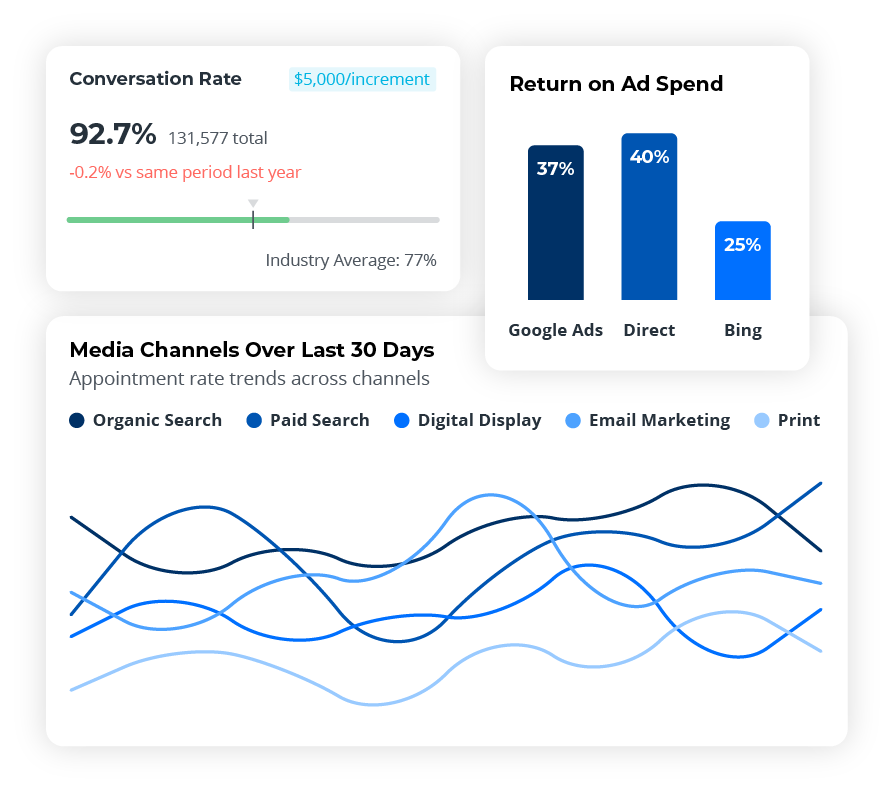
• Analyze performance by location, campaign, customer segment, or channel
• Compare results against industry benchmarks
• Identify anomalies, trends, and sentiment patterns within customer conversations
• Translate analytics into actionable recommendations for teams
Granular analytics and AI-powered insights let businesses move from passive reporting to proactive performance management.
Turning insight into action
Organizations with distributed or multi-location teams commonly struggle to get insights to decision-makers. Leaders need visibility into trends across the business. At the same time, local teams need practical guidance on how to improve results within their own operations.
Centralized conversation analytics platforms can bridge this divide by delivering shared visibility across the organization and permitting teams to dive into performance details.
Marketing teams can identify which channels produce the highest-quality leads. Sales leaders can analyze call handling and conversion performance. Operations teams can detect emerging customer experience problems before they worsen.
When organizations make insights accessible and actionable, they can adjust more quickly, with a direct impact on revenue.
A new approach to performance visibility
As businesses adopt AI-driven analytics, advantages will come from understanding and using data, not just collecting it. Customer conversations are a rich, immediate source of insight into customer needs, team performance, and areas for improvement.
The Marchex Engage PlatformTM is designed to help organizations bring these data together in a centralized environment, helping teams to identify performance gaps, analyze root causes, and act upon.
Where marketing budgets, operational efficiency, and customer expectations require high-level scrutiny, the ability to turn conversation data into verifiable business outcomes is now essential. To learn more, contact us.